
A thousand years on the hill
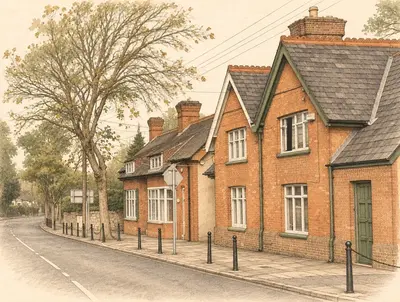
Artist’s impressions drawn from archival views and modern photographs trace the history of Castleknock and its old barony.


Castleknock, then and now
Castleknock village


Castleknock Castle

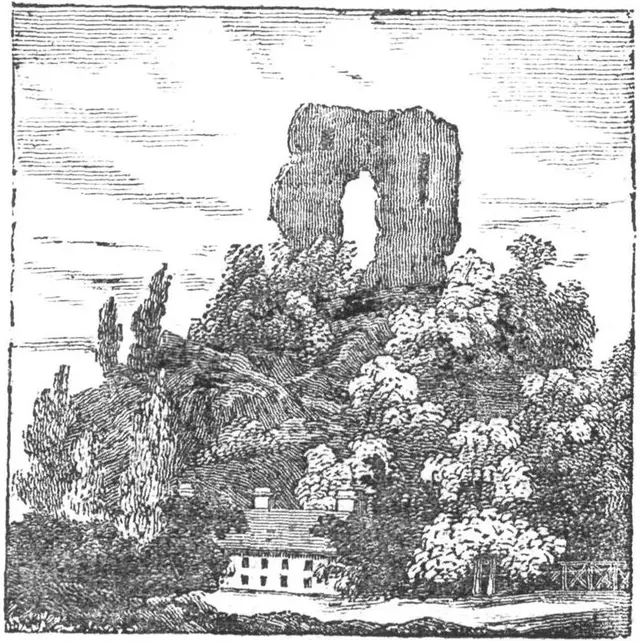

History on your doorstep
Tap a pin to see what happened there. Use the buttons to show or hide each type of place. Every pin has a numbered story card further down the page.
Each pin includes its location source. Battle stories use a memorial or a named locality where indicated. Many sites are private property or school grounds, so check the "access" note on each card before you visit.
More than a village
"Castleknock" once meant a whole barony, a Norman lordship that took in Blanchardstown, Clonsilla, Coolmine, Mulhuddart, Dunsink, Ashtown and the Phoenix Park. These are a few of the numbers behind its story.
Castleknock's population has grown about two and a half times since 1991.
Population of the Castleknock–Knockmaroon electoral division
In the 1830s the whole parish had 4,251 inhabitants, only 188 of them in the village.
Source: Central Statistics Office census (Castleknock–Knockmaroon electoral division; boundaries may vary slightly between censuses). 1830s figure: Lewis, Topographical Dictionary of Ireland (1837).
From Cnucha to the commuter belt
Start with a moment from each era, or select an era to explore it.
When Castleknock changed Ireland
Its position on high ground on the western approach to Dublin put the barony at the centre of events. Whoever wanted the capital usually had to pass through here first.
Brewers, viceroys and ambassadors
From the 18th century the barony filled up with country houses. Two stories stand out: the Guinness family's estates, and the Phoenix Park lodges that went from British rule to Irish independence.
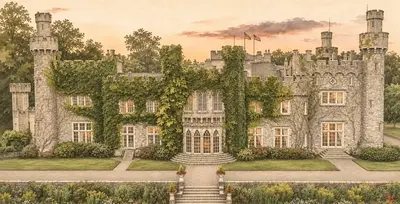
Guinness country
How long the brewing family held its three great local houses. Edward Cecil Guinness was made a baronet "of Castleknock" in 1885.
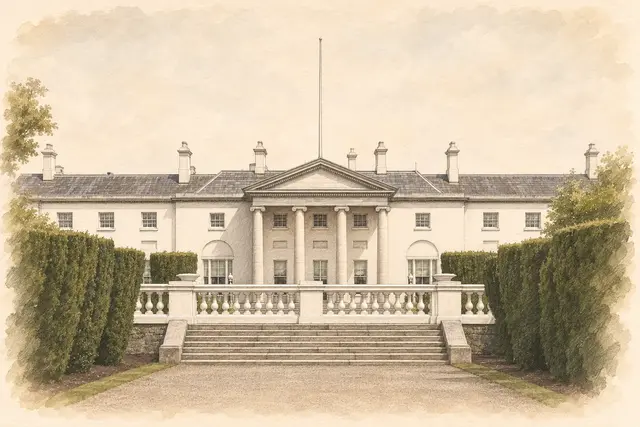
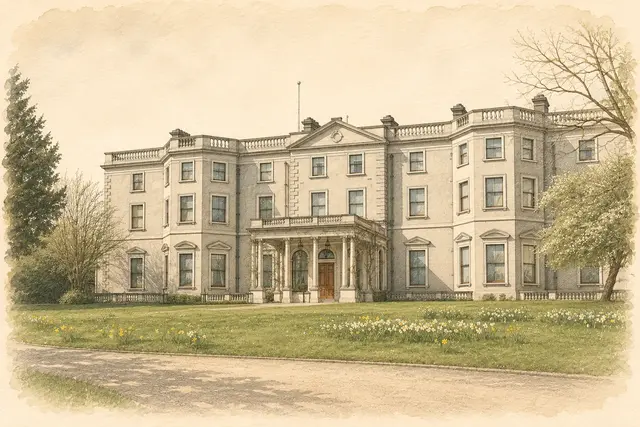
The Park's three lodges: then & now
Under British rule, the Phoenix Park housed the three most powerful officials in Ireland. Here is what became of their homes.
Who held the hill?
The castle mound at Castleknock College has changed hands many times.
The hill was important even before the castle. In 1861 an ancient cromlech, a stone burial tomb, was found in the castle grounds.
Famous faces of the barony
Kings and rebels, a mathematical genius, a Guinness heiress and Ireland's first President. Tap a name to read their story.
Modern Castleknock
 Colin FarrellActor
Born in Castleknock in 1976, Farrell attended Castleknock College. His films include In Bruges and The Banshees of Inisherin.
 Graham LinehanComedy writer
Linehan grew up in Castleknock. He co-wrote Father Ted and created The IT Crowd.
 Jane CaseyCrime novelist
Casey grew up in Castleknock. She writes the Maeve Kerrigan series of crime novels.
 Aoibhín GarrihyActor and broadcaster
Garrihy grew up in Castleknock, beside the Phoenix Park.
 John KirwanRTÉ sports broadcaster and commentator
Kirwan has lived in Castleknock since the late 1960s. He was a familiar voice on RTÉ’s Sunday sports coverage in the 1970s, 1980s and early 1990s, and commentated on the Olympic Games from Moscow 1980 to Atlanta 1996. The Castleknock Today editor confirmed these residence and career details.
In 2024 Kirwan returned to the airwaves with Memories of Moscow, 1980 on RTÉ’s Sunday Miscellany.
 Ciarán KilkennyGaelic footballer
Kilkenny played his club football for Castleknock and won eight All-Ireland senior football titles with Dublin.
 Bernard BroganGaelic footballer
The Dublin footballer helped tell the story of Castleknock village in Fingal’s filmed heritage tour.
 Devin TonerRugby player
Toner attended Castleknock College before playing for Leinster and Ireland. He returned to speak to students about his rugby career.
 Samantha PowerAuthor and diplomat
Power grew up in Castleknock. The Pulitzer Prize-winning author went on to represent the United States at the United Nations.
 Leo VaradkarFormer Taoiseach
Varadkar won a Castleknock seat on Fingal County Council in 2004. His father worked as a GP in the area.
 Nessa ChildersFormer Member of the European Parliament
Childers represented the Dublin constituency, which includes Castleknock, in the European Parliament from 2014 to 2019.
Fact, folklore and the odd ghost
Each story is labelled: True story Legend Local memory
Places to find
Every pin on the map in detail. Tap a card to open the full story, or jump back to its place on the map.


Go deeper
This page is only an introduction. Local historians have spent decades on the barony's story, and these are the best places to continue.